SUSTAINABILITY
OUR DECARBONIZATION ROADMAP
We acknowledge the substantial impact of our operations on the environment and are therefore committed to reduce our carbon footprint. In August 2023, we initiated a significant step in our carbon reduction strategy by submitting our reduction targets to the Science Based Targets initiative (SBTi) for validation. On February 27, 2024, the SBTi formally validated our near-term targets. In 2025, the 2022 baseline and prior years have been recalculated following the acquisition of Gutmann.
Corialis is committed to:
- Reduce the absolute scope 1, 2 and 3 GHG emissions with 25.5% by 2030 from a 2022 base year.
- Increase the annual sourcing of renewable electricity from 63% in 2022 to 100% by 2030.
To realize our ambitious decarbonization strategy, we have identified the following key actions:
Reduce the carbon impact of our billet sourcing
We focus on the strategic selection of our billet suppliers as well as the increased share of low carbon billets in our procurement. Our billet suppliers are actively engaging in sustainability initiatives by investing in renewable energy sources, such as solar and hydropower, to minimize the environmental impact of the aluminium smelting process. Furthermore, they are enhancing the use of of recycled aluminium, which requires less energy for heating, thereby achieving a reduction in the carbon footprint associated with the production of aluminium billets.
Improve energy efficiency
We focus on enhancing energy efficiency across our operations, which includes strict monitoring of energy usage and strategic implementation of upgrades to our equipment, transitioning to more energy-efficient alternatives. By obtaining ISO 50001 certification for our energy management systems, Corialis has implemented a comprehensive process to improve energy efficiency across its operations.
Increase the usage of renewable electricity
We invest in renewable energy projects whereby we install solar panels in all production hubs. In addition, we plan to increase the ratio of green electricity contracts in the coming years.
PROGRESS ON DECARBONIZATION TARGETS
Base year
Progress
Target
Metric
2022
2024
2025
25,5% absolute reduction in scope 1, 2, and 3 GHG emissions by 2030
Scope 1 emissions (in t CO2e)
Scope 2 emissions (in t CO2e)
Scope 3 emissions (in t CO2e)
32.520
11.989
1.366.675
28.551
5.830
1.117.272
28.910
5.355
1.045.999
1.411.185
1.151.652
1.080.264
Increase annual sourcing of renewable electricity to 100% by 2030
Certified renewable electricity as a share of total electricity consumption
58%
66%
74%
Corialis has already completed ca. 90% of its absolute reduction target over the 2022-2025 period, which is mainly linked to improved billet sourcing. The increase in renewable electricity sourcing is mainly diven by the inclusion of Guarantees of Origin (GOs) in the electricity contract for our new building in Portugal and the expansion of our in-house renewable generation capacity. This includes the installation and commissioning of additional solar panels across several hubs in Belgium, UK, Portugal and France.
We are accelerating the production and use of solar power across our production hubs:
OUR SOLAR ELECTRICITY USAGE
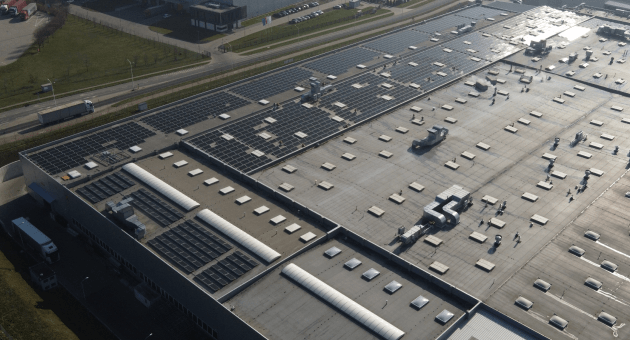
ca. 5000 Mwh/annum estimated annual solar PV generation

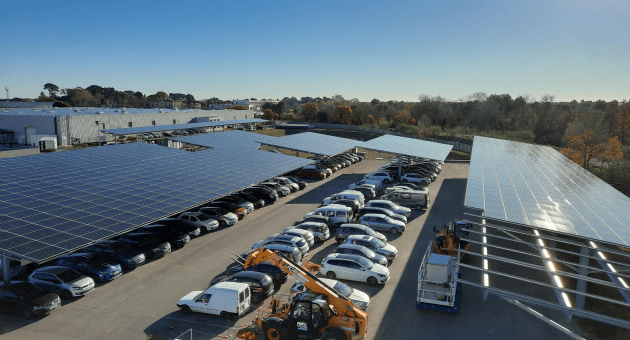
ca. 5000 Mwh/annum estimated annual solar PV generation

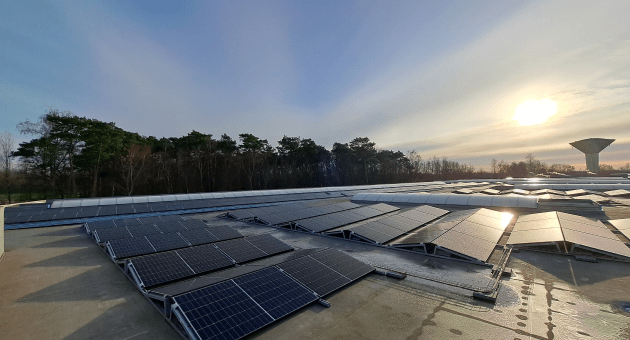
ca. 1500 Mwh/annum estimated annual solar PV generation

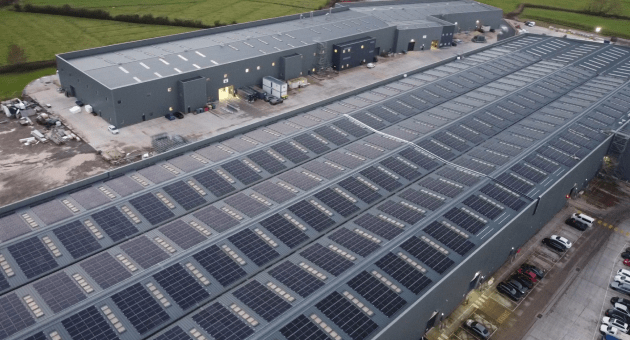
ca. 2700 Mwh/annum estimated annual solar PV generation

OUR ALUMINIUM IN THE GREEN TRANSITION
Aluminium is recognized as a strategic material, essential for achieving the European Green Deal's objectives. Its applications span from construction to clean technologies, including wind turbines, solar panels, electric vehicles and batteries. Aluminium's high conductivity, light weight, corrosion resistance and durability make it ideal for renewable energy systems. Moreover, its infinite recyclability aligns with the circular economy principles, evidenced by the fact that 75% of all aluminium ever produced is still in use today. In Europe, recycling rates exceed 90% in the automotive and building sectors, underlining aluminium's significant role in sustainable development.
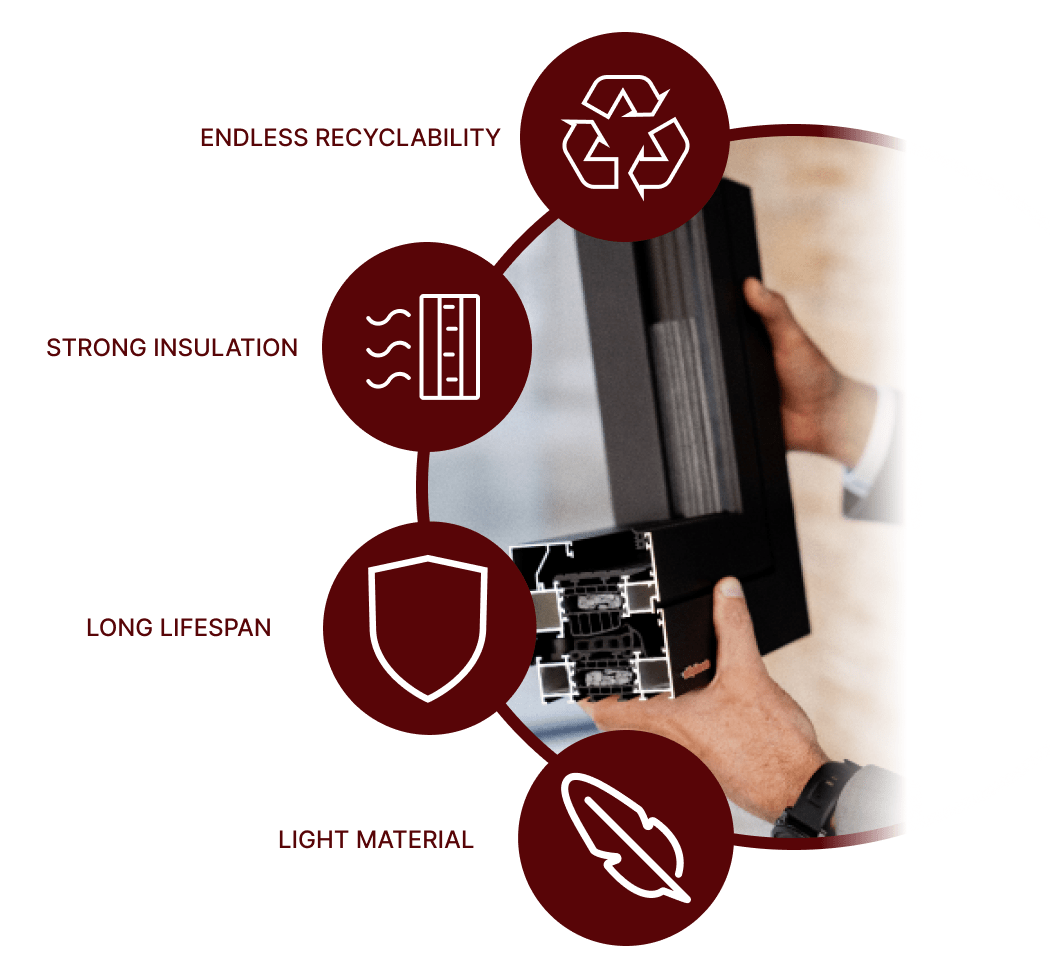
The main characteristics which define an aluminium system as a sustainable material are:
- Endless recyclability without quality degradation, making it an ideal material for a circular economy.
- Strong insulation properties, significantly enhancing the sustainability of building infrastructure.
- Average lifespan of 40-50 years, resulting in a lower lifetime cost compared to other materials.
- Light material which is extremely strong, perfect for reducing the weight and consequently the environmental footprint of building structures.